I looked at the alarm clock: 3:30 AM. Depending on who you’d ask, they’d say it was either really late at night or too damn early in the morning. The idea of sleep had all but slipped away at that point. It was an unholy night as I pondered one of life’s most serious and rather unforgiving decisions. Which one?
Which, of all of GM’s badass motors, would I drop into the 1958 Chevrolet Impala I’d been building? Plucked from the desert, she was being meticulously restored with all rot removed, the body and frame smoothed, primed, and painted. A stunning burgundy glistened in the sun with the most beautiful pearl paint you’d ever seen. We had to move forward, and the rest of the restomod build plan depended on this one fateful decision. Would it be a small-block Chevy, a big-block, or an LS swap?
It should have been an easy choice, yet there I sat, in the pitch-blackness of my room, with only a dim blue light to illuminate the overly stressed look that clung to my sleepless face. “Of course I want the big block!” I muttered. The angry lope, the brutal torque, the sheer sex appeal of massive cubic inches could be mine! But what about fuel economy or weight? I guess I could drop in a small block? Yes! A high-revving mouse with a bad attitude could do the trick. But what about drivability? Perhaps an LS motor? How foolish was I to consider anything else!? But what about the cost of parts or the loss of the nostalgia factor? Decisions…decisions…
Well, we’re going to help save you some sleepless nights and impart some hard-earned wisdom we’ve all acquired so that when the time comes to plan your build, you’ll know all the ins and outs, pros and cons in the never-ending saga of the GM motor shootout.
The Mighty Mouse – The Small Block Chevy
In 1955, Chevrolet Corvette sales were in a slump, and Chevy had no answer for rival V8 motors. Luckily, the engineering team designed the dynasty-starting, Corvette-saving, Chevy “Turbo Fire” 265 in only fifteen weeks and forever altered hot rod history. That little motor later gave birth to the legendary 289, 302, and, of course, the 350. Now, if you’re building a restomod, you’re probably eyeing the stroked-out and pissed-off 383 stroker because, why not? The radical power increase in a small package is worth every penny. Alas, with the good comes the bad, so let us judge the GM trio.
What’s to love about the SBC:
- Cross-platform Ease: There’s no doubt about it, the Chevy SBC is the most universal V8 engine on the market. So whether you’re wrenching on a Camaro, Nova, Chevelle, or maybe you’re running a GTO, Cutlass, or Firebird, chances are you’re only a motor mount change away from stuffing a hot small block between your fender wells.
- Installation Is A Breeze: Have you ever done a motor swap in a Mopar or Ford? It’s enough to drive a person downright mad with shock-tower issues, torsion-bar nightmares, or k-members that make you want to do something else that starts with the word k and ends in ill. But GM, they had the foresight to build everything damn near identical. There’s no issue dropping a SBC into an engine bay with wide fenders that feel more like wide open arms waiting to embrace you.
- Lightweight With A Nasty Hook: Running a small block is like getting into a fight with Manny Pacquiao. He’s light, he’s quick, and he’ll still knock you on your ass. The small block weighs only 575 lbs, fully loaded with iron heads and an intake. Now, slap on a pair of aluminum heads and intake, and you’re going to shave a minimum of 50 lbs off the nose of your ride. Doesn’t sound like much? For every 100 lbs lost, you gain about 1/10 of a second in the quarter mile. Combine that with anywhere from 350 to over 500 horsepower, and you’ve got yourself a quick machine that’s also light on the front end, giving you better handling as well.
- Bang For The Buck: With over 100 million Chevy small blocks produced, it’s the cheapest way to get into the horsepower game. Not only are parts plentiful and low cost, but so are crate engines! You can snag a turnkey SBC for pennies on the dime and have your hot rod on the road in no time.
What’s to hate about the SBC:
- Limited Power: Sure, you can build a wild small block stroker and gain as many cubes out of the small block as possible, but you’re going to have two issues: First, you’re going to drop big money and still have a small block. Second, you’re not going to have a reliable machine that you can hop in and cruise. The 383 is really going to start to struggle with anything past 500 naturally aspirated ponies.
- Vintage Iron Is Still Vintage: An SBC will still have issues like those of yesteryear. She’s not going to give you the efficiency of an LS motor. And unless you have the money for EFI, you’re still going to be tweaking your carb constantly. So plan on more maintenance and less mileage.
The Rat – Chevrolet Big Block
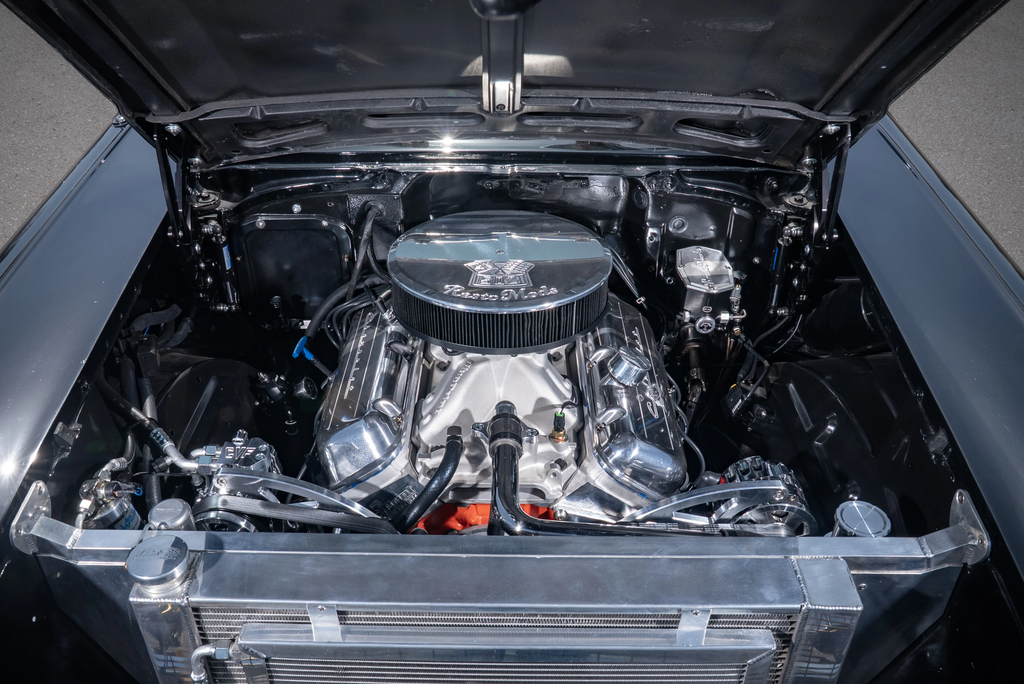
Have you ever seen an early series W big block motor? I’m talking the 348 introduced in 1958 for trucks and the sexy Chevy Impala. They. Are. Bitchin’. Plus, they provided something that the small block was missing: torque! The W series eventually gave way to the Mark IIV, which produced some of the most iconic motors of all time, like the 396, 427, and, of course, the highest-rated powerhouse during the muscle car craze, the 454 LS6! Now, let us bow down and worship the mighty big block.
Why you gotta have a big block:
- It’s a big block: Enough said.
- Sheer brutality: My old man used to tell stories of laying a $20 on the dash and betting anyone that they could have it, as long as they snagged it between the time he dropped the clutch and hammered into second gear, in his 454 LS6 Chevelle. And legend says that no one ever got the dough. Why? Because big blocks are monsters that love low rpm torque that pins you in the seat and makes you beg for mercy.
- Terrifying Rumble: If you’re looking to be noticed, then get a big block. They are, without a doubt, the baddest sounding mothers on the street when built with a bad attitude. There’s no doubt that a big block takes the cake here.
- Sheer Presence and Respect: If there’s anything that demands respect, it’s the big block. Pop the hood of your hot rod at any car show, and if you’ve got a big block, then you’ve got people surrounding your car. Massive valve covers fill the engine bay as people stare at the original kings of the street.
- More Cubes Means More Power: The beauty of these beasts is that you can pull out a massive amount of cubes and power! For example, Restomods.com’s latest giveaway, the iconic 1957 Chevrolet Bel-Air, is rocking a Blueprint Engines 502 crate engine that delivers over 630 horsepower, naturally aspirated. What’s that? You want more power? Well, of course you do. How about a 572 crate engine with 750 ponies? Still not enough? What about the punched-out and completely insane 632 cubic inch monster that delivers over 1,015 horsepower! Yeah, you get my drift.
Not all that glitters is made of gold…
- A true heavyweight: They are heavy. Like really heavy. 685 lbs on the nose of your front end does some serious damage to handling. And even when you put her on a diet, you’re still north of 550 lbs.
- Limited Space: Those sexy yet massive valve covers? Well, they come at a cost, and that’s space. Especially when you mount a set of larger headers, and that’s when, even with the space in old Chevys, you start getting creative and running out of room.
- One Hot Runner: Big block Chevys require upgraded cooling systems. They do not want to sit, especially in summer heat, without a four-core radiator and a spinning fan. Be prepared to check that temp gauge when driving your big block because it’ll start creeping up.
- Pass Everything But A Gas Station: Fuel is expensive, which means feeding your big block is no easy task in today’s world. The infamous LS6 might get 7-8 miles per gallon, if you keep your foot out of it. But when you drive it right, you’re looking at 3-4 miles per gallon. Better make sure the fuel gauge is working and accurate.
- Start Building From The Rear: If you know a big block is in your future, you gotta start from the rear and work your way forward, or else the first time you burn rubber, you’re also going to nuke that 10-bolt. Splines with shift, gears will shatter, and poor suspension systems will buckle under the torque of a big block. Plan, both in parts and money, when you decide to bolt in a big block.
The Modern Warrior
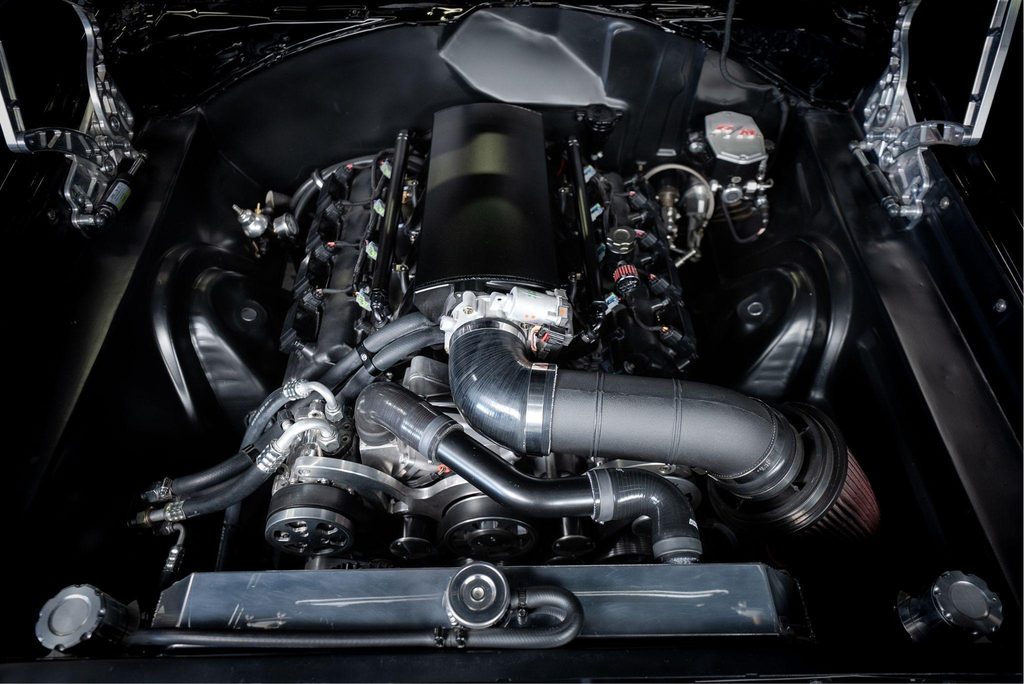
Chevrolet rolled out the LS in 1997, nearly 30 years ago. And since then, all muscle cars, yes, even Ford and Mopar, have found ways to swap in the infamous LS. LS swap the world isn’t some catchy phrase; it’s a cult-like movement hellbent on spreading the good word on this motor family. Why are they so devout? Because GM took the lightweight benefit of the small block and made it easy to build into snarling big-block power. Oh, and did I mention that they are reliable as hell? My friends, the future is here.
LS Swap the World:
- Unbelievable Power-to-Weight Ratio: An all-aluminum LS engine weighs just 415 lbs! Holy crap! That’s 100 lbs (or .10 second) less than the SBC. This means that your ride is going to be a corner-carving, highway cruising, drifting machine! This means your ride is versatile; it’ll do it all with proper suspension planning.
- Superior Lungs: The V8 engine is an oversized air pump. The more it breathes, the more power it creates, and the LS engine breathes! Massive amounts of CFM is only one part of what makes this motor so special.
- Daily Driver – Nightly Racer: Need something you can daily to work and tear up the track at night? LS swap it. Need to know that it’s going to start every time you turn the key? Hello LS! Want ice-cold AC? That LS is looking sweet. How about 20 miles per gallon? Hell yeah. You get the picture; the LS platform gives you all of the creature comforts we’ve become accustomed to while providing the thrill of Chevy motors of yesteryear.
- Availability and Affordability: In almost three decades, GM has managed to produce over 100 million of these motors. Much like its SBC predecessor, gathering parts is a breeze. Buying a crate motor? No problem. Hell, make a trip to the local yard and pick up a motor for dirt cheap.
- Unbelievable Power and Longevity: It’s no longer a surprise to see a junkyard LS motor with over 100,000 miles sitting under the hood of a Chevelle, GTO, or Camaro. Even less surprising is seeing a big ass turbo mounted to it. Why? Because power and thrills are cheap in the LS world. This platform makes it easy to plug, play, and know that you’ve got 200,000-plus miles in this investment.
Why the LS can make you weep:
- Cheap Parts – Expensive Swaps: Yes, you can get cheap parts for this motor. But be prepared to fork out some extra dough when you transplant a modern motor into a classic vehicle. Swaps can incur a fee of $3,000 to well over $10,000, depending on how fast you want to go.
- Lacks Sex Appeal: Sorry to say, but an LS motor will not draw the same attention as a big block. An SBC or BBC has a nostalgic simplicity that makes them exciting. They are raw and mechanical while the LS looks like a nice commuter car motor. Sure, you can dress them up to look vintage, but that costs more money to cosplay.
- Less Grease Monkey and More Techy: The LS motor has a computer. You drive by wire, not by cable. There’s a lack of visceral, analog feeling in an LS motor. You don’t tune with a stethoscope and a screwdriver but a laptop. With an LS, you sacrifice vintage cool for modern amenities.
Am I biased? Yes, I am. Yet, I love each option, and I’ve worked on them all. Here at RestoMods.com, we modernize amazing builds so that they can be driven and enjoyed, and we still utilize old school iron. There are pros and cons to everything in life; the hard part is deciding which is best for you. Luckily, there’s no wrong choice. Which is best is strictly a personal decision.
Remember, this is your car, and you decided what to do with her. All we hope is to see you on the road, doing what they built for, driving the hell out of ‘em with a smile on your face. So whether it’s a big block, small block, or LS, get it built and get on the road. See you out there!