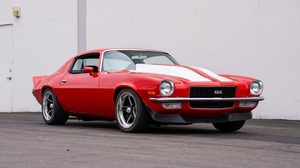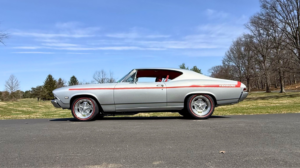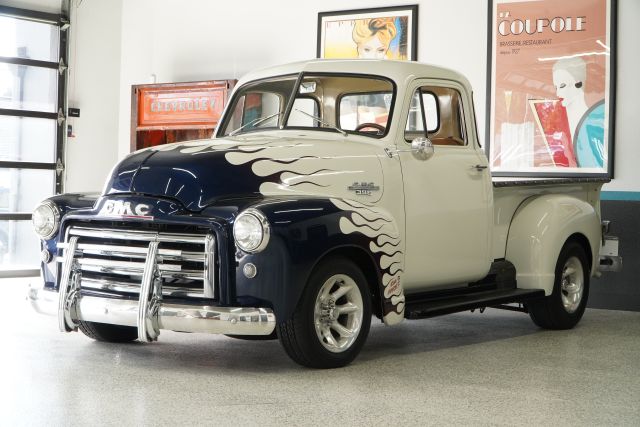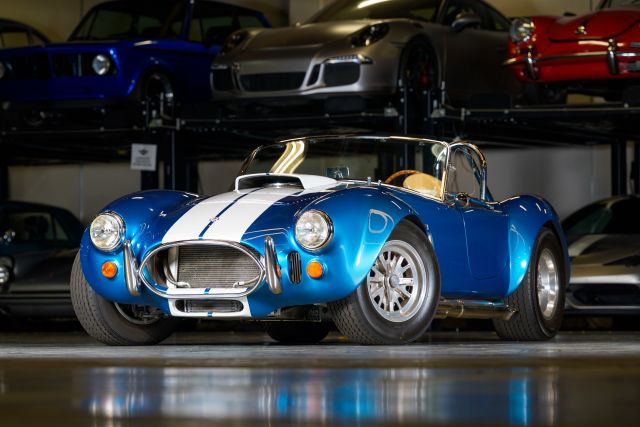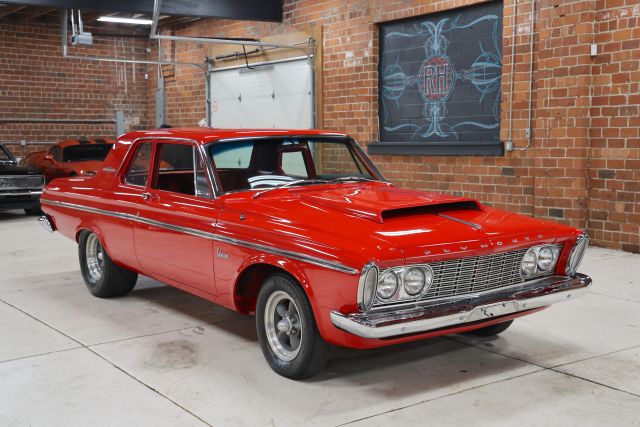
Sixty years ago, Chevrolet unveiled their answer to Ford’s unstoppable pony car, the 1967 Camaro. The name is said to have originated as a French slang word meaning “friend, pal, or comrade,” but we prefer Chevy’s more eloquent take: “a small vicious animal that eats mustangs.” Hell. Yes. Chevrolet. That’s the type of attitude we need for the next generation of Camaro…please!
While Chevy drags its heels and makes us wait for a revival of the celebrated namesake, we’ve decided to cover a topic we know and love: Restomodding (yes, that’s a real verb). Today, we’re covering what makes each generation great for a modern overhaul and what needs improvement to take an already incredible machine to the next level.
Gen One: 1967 – 1969
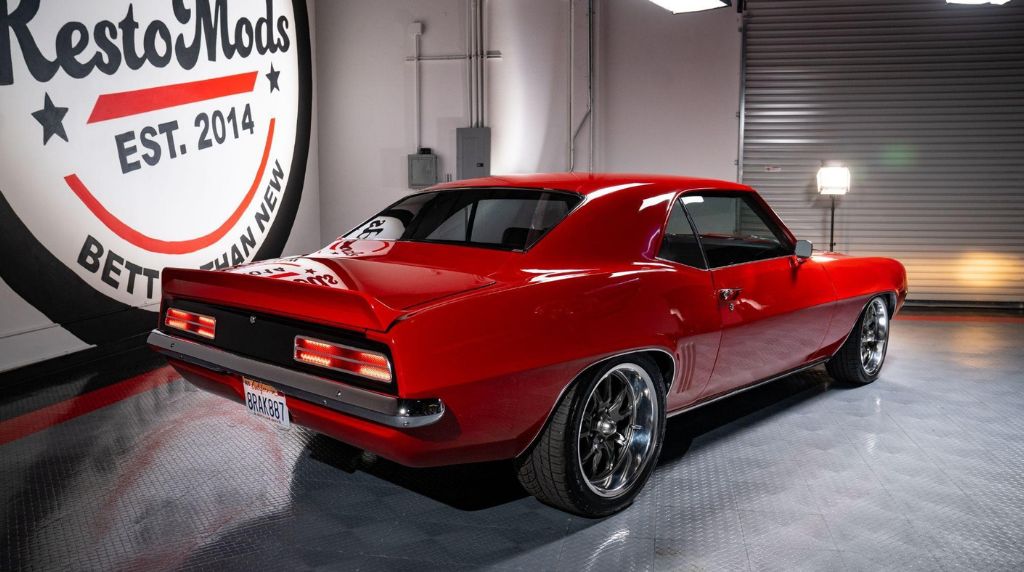
With a long hood, short deck, and one hell of a side profile, the first-generation Camaro is arguably one of the most sought-after, recognizable, and drop-dead sexy muscle cars ever built.
Strengths:
- High Valuations: The first-gen Camaro is a safe investment. Whether stock or customized, they always command top dollar.
- Large Engine Bay: Though the Camaro has a smaller footprint than other muscle cars, its engine bay easily fits an LS, small-block, or big-block motor.
- Unmatched aftermarket: The Camaro aftermarket is unbelievably large, with the ability to build an entire Camaro from a catalog.
Weakness:
- Chassis and body flex: The unibody frame, where only half of the car rides on a full steel frame, leaves the first-gen Camaro susceptible to horrendous body and chassis flexing. Tight corners or massive amounts of torque twist you like a baguette.
- Sloppy steering: The steering is loose. Imagine driving a boat as it crashes over waves, and you’ll get a sense of what these cars feel like at high speeds.
- Flawed geometry: American vehicle performance meant going fast in a straight line. Poor camber curves lead to heavy understeer.
- Leaf spring rear axles: Nothing will beat the hell out of you quite like a leaf spring rear axle that’s fighting for traction. And with these cars, that’s just what you get from a stock rear suspension.
- Dreaded drum brakes: All of these cars came with drums in the rear, and a lucky few ran tiny discs in the front. If you want to know what it feels like to skid across a giant slab of ice in the dead of summer, then lock up a set of drums when you’re doing 100 mph, and you’ll see real quick why they are no good.
The Blueprint:
- Steering and Suspension: You’ll always have the option of a complete chassis swap. Or if you’re on a budget, invest in full-length subframe connectors to strengthen your body. Mount a rack-and-pinion steering kit, tubular A-arms, coil-over shocks, and then convert that rear end to a coil-over system!
- Powertrain: The sky is the limit here! Get wild with a 2JZ 6-cylinder, a nasty 383 stroker, the beastly 427 rat, or the holy grail of restomods, LS swap it! With an abundance of parts and kits, you can’t go wrong, especially with an easy-to-install TKO overdrive transmission behind your powerplant.
- Brakes: Bring it all together with large 4– and 6-piston disc brakes at each corner to stop just as fast as it got going.
Gen Two: 1970 – 1981
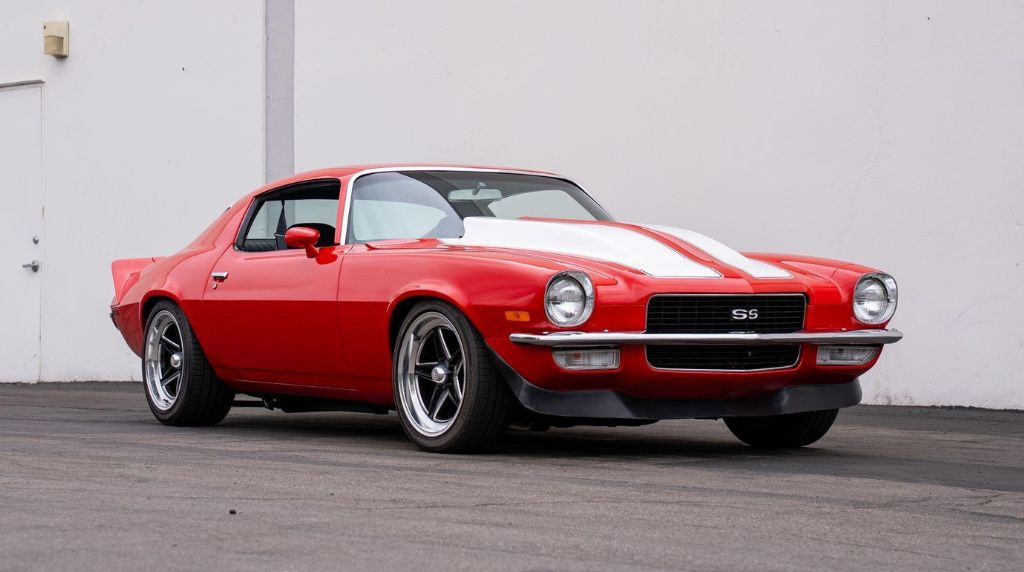
The second generation saw a massive transformation, inside and out, that carried the Camaro through tough times. Even though horsepower dipped, their handling increased, making second gens a great canvas for your restomod.
Strengths:
- Improved Front Geometry: The front suspension was completely redesigned from Gen One with taller spindles, longer control arms, and forward-mounted steering boxes that drastically improved performance.
- Wider Track Width: A wider front and rear track lowers the center of gravity for better handling and stability.
- Stiffer uni-body Construction: Integrated rear frame rails and stronger rocker panels beef up your stock body for increased strength.
Weakness:
- Sloppy Rear Springs: While the front suspension was dialed in, sloppy old leaf springs were left out back, leaving the Camaro susceptible to the same issues as the first generation.
- Smog Regulations and Low Compression: With the World turning its back on high-performance V8S in favor of smaller, smog-choked motors, Camaros were riddled with low-compression motors with an enormous amount of rubber hoses and carbon canisters to choke the once-proud small block.
- Heavy Impact Bumpers: 1974 – 1981 models were weighed down with heavy steel beams that protruded past the front and rear axles, severely damaging power-to-weight ratios and handling.
The Blueprint:
- A Nasty Motor: Dump that low-compression small block and drop in an SBC, BBC, or LS motor! Give the second gen all the power it deserves, and more, with the added benefit of reliability.
- Shed Some Pounds: Ditch the nasty bumper reinforcements with fiberglass bumper or tucked steel bumper conversion kits. Continue gutting all unnecessary canisters, hoses, and any other hidden fuel regulators to lighten your F-body back up.
- Leave Out The Leaf Springs: No more springs in the rear! Find yourself a new suspension kit or at least some coilovers to plant your rear end to the ground and go!
Gen Three: 1982 – 1992
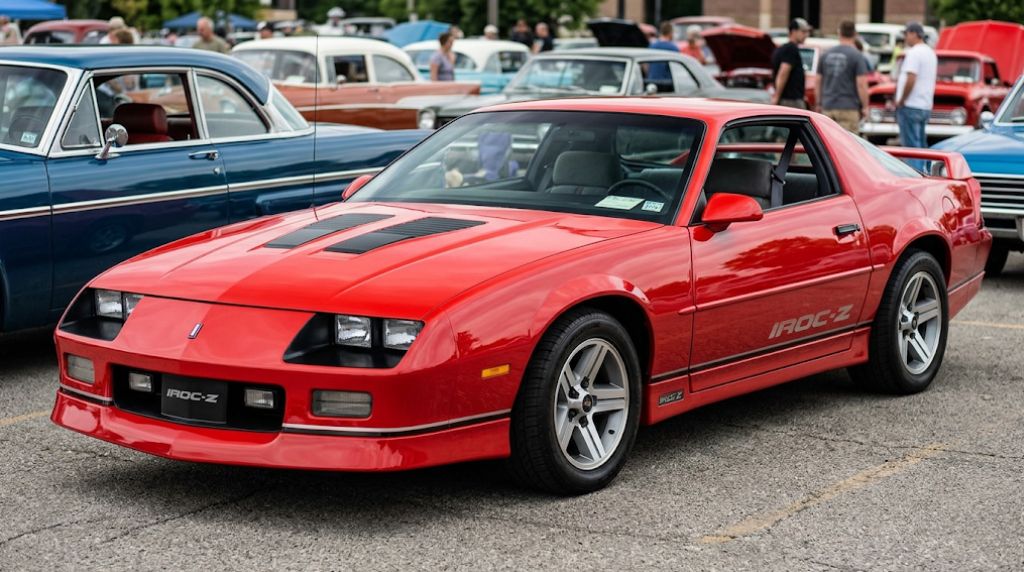
Diving headfirst into a new and electrifying future, the Camaro sought to perfect its pursuit of high-performance driving with radical new designs.
Strengths:
- Lightweight: The Camaro shed hundreds of pounds by dumping the all-steel front sub-frame in favor of a complete uni-body system. These Camaros easily sit around 3,000 – 3,300 lbs fully dressed.
- Aerodynamic Design: The wedge profile and aggressive sloping glass provide a great canvas for modern pro-touring styling and improved high-speed stability
- Low Cost Entry…For Now: Third gens don’t have the same demand as the coveted first and second gens, yet. With a new generation coming into the game, snatch one while you can.
- Modified MacPherson Struts: The coil springs sit separately between the lower A-arm and crossmember rather than around the strut.
- Bye-Bye Leaf Springs: Hello coil springs! After getting it wrong for two decades, GM finally decided to build a high-performance rear suspension the Camaro always deserved. Updated with coil springs, a torque arm to stop the axle from twisting, and a Panhard rod to lock the axle tightly in place.
Weakness:
- Unibody Twisting and Cracking: Due to the thin-gauge steel unibody and T-top options, high-horsepower applications regularly cause sheet-metal failure with stress cracks and door alignment issues.
- Weak GM 7.5-Inch 10-Bolt Rear End: The factory 10-bolt rear end features tiny and weak 7.5-inch ring gears and 26-spline axles that have a history of failure once you up your performance numbers.
- Restrictive Induction & Fuel Systems: Cross-Fire Injection (1982–1984) and early Tuned Port Injection (TPI) chokes high-RPM airflow (choking out around 4,500 RPM), limiting your fun and your power.
The Blueprint:
- Structural Reinforcement: Weld in outer subframe connectors, a heavy-duty steering box brace (“Wonderbar”), and a front strut tower brace. Reinforce torque box mounting areas.
- Powertrain & Drivetrain: Swap to an LS1, LS3, or Gen V LT4 with some modern EFI to really let her rip. And it goes without saying, please replace the weak 7.5-inch rear axle with a custom 8.8-inch or Ford 9-inch torque-arm housing.
- Suspension & Braking: Upgrade the factory front MacPherson struts to adjustable units or full coilover conversion kits. Then upgrade your brakes to a much larger diameter disc to make sure you and your Camaro get home in one piece.
The Camaro lived on for three more generations, six total, before getting the axe in 2023. And to be fair, they are all great-value, high-performance machines with incredible potential. But for our purposes, we’re going to stop at gen three, the classics. These muscle cars are lightweight, sexy, and have plenty of parts and spare room for practically anything you can dream of shoving between their fender wells. Which is exactly what we want you to do! So when the next Camaro pops up on BuyTheCar.com, bid on it with confidence, knowing that you’re about to scoop up one of the greatest platforms ever built so you can build the restomod of your dreams. Happy cruising, everyone.