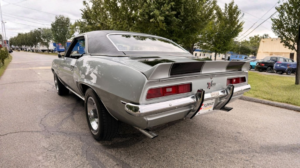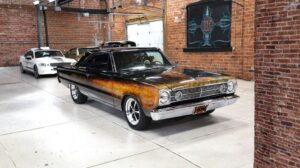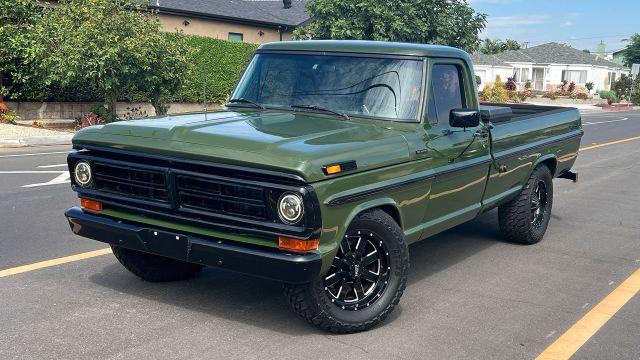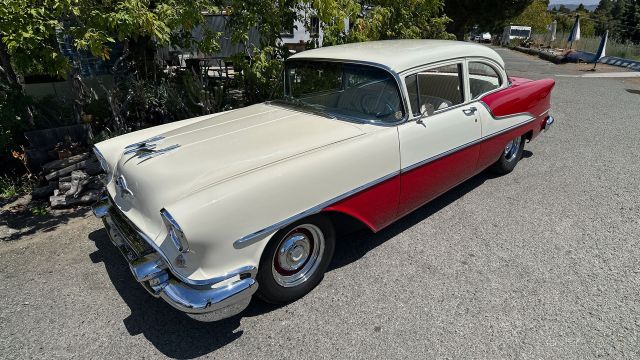
There they sit, side by side, two 340 Plymouth Cudas with pistol-grip 4-speed transmissions. Both are pure American muscle and prime examples of Mopar prowess. Obviously, both are Plum Crazy Purple; one is a complete nuts-and-bolts restoration and the other a survivor with signs of aging. One body is nearly perfect while the other has some rust. Yet, the one with imperfections seemed to draw a crowd larger than the clean machine parked next to it. The thing is, you’re not looking at identical cars. No, they are very different indeed.
There are few types of classic cars that demand not only respect but sheer reverence from the car community. A vehicle that will make grown men go to their knees, unsure if they’ll be able to stand up again, just to get a peek of the undercarriage. With two hands on their thighs, they will suffer an untold amount of lower back pain just to peer under the hood, pointing out original stickers, factory markings, and bone stock parts. They are, without a doubt, stepping into a time capsule as they absorb the awesomeness of the muscle car before them. No, I’m not talking about a 960-point restored Chevrolet Chevelle. I’m talking about a survivor!
These two classic time capsules reignite memories, and evoke images of freedom, speed, and a time gone forever, drawing everyone into a sense of nostalgia and wonder. Not only do they conjure feelings few cars can create, but they are also rare! And becoming more rare by the day. I see you. Yes, you, shaking your head saying, “My perfectly restored Charger invokes the same feelings!”
And you’re right…kinda. The average age of a muscle car is now over half a century. That means that most of those who experienced them as brand new are well into their golden years. The original owner generation, (along with Gen Z, and even some millennials), have restored most cars over the last 25 years of their lives, keeping them alive and on the road. Which means that the survivor is rare, and rare commodities drive demand and awe. And an untouched artifact simply draws people in a way a restoration never can.
Just exactly what places a muscle car in the coveted time capsule category as a survivor? We all know that guy who’s pitching his rotted-out Camaro with no interior or drivetrain, or even much of a body, as a survivor. Sorry, bucko, but that’s not gonna make the cut.
Rule 1: “80% There”
A real, unrestored classic needs to have at least 80% of its original factory finish and its correct factory interior. We all drool over the social media reels featuring a Ford Mustang with thirty-eight years of dirt rolling into a shop, only to be sprayed down and shined up. The result; a stunningly new-looking car. Keep in mind, though, that many survivors may have a patina. Wear and tear from a long life, with the blazing ball in the sky having at it. As long as most of that original paint is good, you’re good. Same goes for the interior; gotta have the right seats, stereo, dash, and often carpet. And in the end, all of the parts and colors must match your build sheet, if you’re damn lucky to have one intact!
Rule 2: Numbers Match
Let’s say you have a car with shiny, original paint and an interior that looks and smells like it’s straight out of the 1970s. Bitchin’! There’s only one problem: that badge that says 327 no longer matches the Chevy 396 tucked inside the fender wells. Or perhaps that old transmission and rear end disappeared years ago. We get it, a lot of stuff happens over half a century. But if you don’t have the original, date-coded drivetrain for your car, I’m sorry, but you don’t have a survivor.
Rule 3: Marked Up
One of the things that really does make a survivor so special is seeing the fifty-year-old, (or older), factory markings. When these cars rolled down the assembly line, autoworkers (before machines snatched up human jobs) would use assembly line markings throughout the vehicle. You might find a dash of paint, a signature, or handwritten codes anywhere from the firewall to a cylinder head, or even under your dash. They indicated what passed inspection and which part was which. Today, the most important role for these markings is simply being cool as hell. We also want to see some original, crusty, and dried stickers throughout the car. Anything that shows us exactly how this car looked the day it rolled off the assembly line.
Not a rule, but a helpful paper trail
If you’ve got a paper trail of ownership, boy are you in luck. That’ll help make the case for your car’s status. If you’re lucky enough to rock the original build sheet or window sticker, well then, the Gods of Speed have smiled on you.
Restored cars are a critical element for the preservation of our hobby. These are the cars that are no longer simply survivors; whether that means they’ve been stripped down, left to rot, or simply had their originality removed or replaced, and then rebuilt. These restored vehicles keep classic cars on the road. For most of us, it’s not just a hobby. We’ve spent countless hours over, under, and all over our car, bringing it back to life. It feels much less like a hobby and more like a calling. We’re saving something that once was, and giving it a future is a worthy cause indeed.
But when a car undergoes a complete restoration, it’s replicating, not preserving. Slow your horses now; I said replicating, not a replica. These machines often have matching numbers or an original drivetrain, but that original paint is repainted and the interior replaced to replicate a fresh-off-the-factory-floor vehicle. And considering these differences, we must consider the differences in what it means to own one or the other.
It wasn’t long ago that a car with a bit of rust or patina would be whisked away to the shop for a repaint. Rust was hunted down and destroyed with near reckless abandon. But, as it always does, the world changes, and new trends emerge. With their rarity increasing at lightening speed, cars with rust and patina are now being preserved. And they’re commanding a premium that rivals that of their restored counterparts. These cars are only original once, and once they’re altered, no amount of money can purchase over 50 years of history. Which is the driving factor in their skyrocketing values.
Ironically, both restored and unrestored cars can likely fall into the driving dilemma. The “Trailer Queen” with so much time and money poured into it that the owner fears letting it see the open road. Nicks, scratches, dings, and dents are inevitable for a car on the road, and some folks aren’t willing to risk their perfect restoration. Now, a survivor most likely has some of the superficial flaws (unless you’ve found a museum-worthy example), which begs the question: shall I drive an already flawed vehicle? Will a few more knicks or dings really make a difference? The answer is . . . it depends. Some see it as a risk. What if the damage is so severe that you’re forced to repair your once-original car? What if you blow the original motor? These are honestly personal questions you’ll have to deal with while behind the wheel of your own classic car.
A restored vehicle boasts the ability to replace or repair with ease, while repairing anything on a survivor can be a tedious and often stressful ordeal. There’s no quick trip to the auto parts store to replace something simple. No, you’re in for hours of research and treasure hunting for original parts. Which many of us enjoy doing. But a restored car will always be easier to fix.
Have you ever seen the face of a die-hard preservationist when you tell them that you washed your survivor car? Their baffled look and broken heart for your vehicle is beyond evident. And to an extent, they’re right. A restored vehicle likely has multiple layers of protection against rust while your survivor doesn’t. Water is the enemy for a survivor, and many owners have to get creative while cleaning.
At the end of the day, by owning a classic car in any condition, whether a project, restoration, restomod, or a survivor, each comes with pros and cons. And each have their own niche and followers. Our differences and unique experiences make our hobbies special, not just the car. The vehicle is a catalyst to meaningful conversations, fun bench racing experiences, and friendships that can last a lifetime. So, whether you find yourself behind the wheel of something new, old, or recently restored, you’re in a good place.
But heed my warning: if you find yourself as the owner of a survivor, take care of that car. Because it’s special. They’re only original once, and it’s now your obligation to protect that history. Happy hunting, and happy bidding here at BuyTheCar.com.