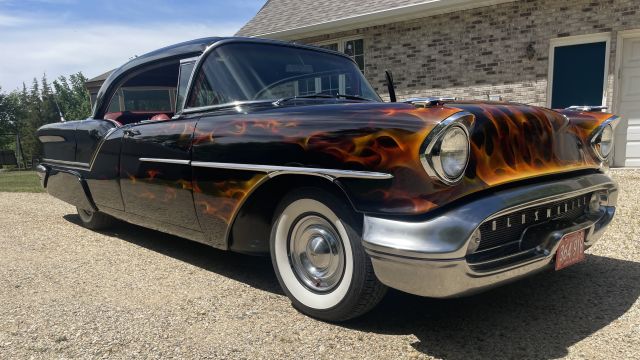
Sweat dripped from my forehead as I glared with rage at the rusty bolt. No amount of PB Blaster and all the strength I had could break it loose from the 50 years of rust that had practically welded the nut to the frame. With a pile of tools that had failed me (and no torch nearby), I decided to call in my last resort, Dad. I explained my situation to him and pointed an angry finger at the defiant chunk of metal that stood between me and installing a new suspension on the ‘58 Impala.
Dad smiled, removed the extension bar from my jack, and placed it on the end of the wrench. “Son, remember that everything in life comes down to two things…” He pressed on the back of the bar, and the bolt broke loose, then finished his thought, “timing and leverage.” He handed me the wrench and strutted out of the garage, a giant smile on his face.
Never have his words of wisdom been truer than in the world of classic car auctions. Proper timing can make an average decision look brilliant, while bad timing can make a brilliant idea fall flat. Leverage is what gives you an advantage and tilts the odds in your favor. Combine the two, and you’ll be one happy hotrodder. And very few things have as much of an effect on your auction results as setting the right reserve price or maybe not setting one at all.
So, what the heck is a reserve price? It’s the lowest amount or lowest bid a seller is willing to accept for their car. Simple as that.
Well, shoot, this might be the shortest article I’ve ever written if that’s all it’s for…except it’s so much more than that. Let’s dive into the types of mind games this lil’ word causes and how to utilize it at the right time and leverage it for your benefit.
Timing:
- A well-set reserve price signals confidence in the vehicle’s value and condition.
- Having a reserve price protects you from tire-kickers and encourages real buyers to get active in your auction.
- Setting a proper reserve price, or not setting one at all, can help create momentum for your auction early on and drive bids.
- The reserve price lets you gauge market interest without risking your car or your shorts in the auction.
One eternal and unshakable fact of the reserve price: The reserve price is not the estimated value of the vehicle, nor should it be set for the amount you want to sell for. Your reserve price should be the lowest amount you’re willing to accept, not what you’re hoping for. Setting your reserve price too high is one of the biggest mistakes you could make for your sale.
“Then what the hell is a reserve price for if I shouldn’t set it for what I want?” Fair question. Even though that drop-dead sexy Corvette has six figures invested in a restomod build, it might not sell for that much. Why? Timing. This creates momentum, puts bids on the car early, and drives interest by letting others know your badass hot rod is in demand!
Before you decide to let that beauty parked in your garage go, make sure to do some investigating. Research the market, a classic car’s value is determined by the timing of your sale and current trends. Utilize what you learn to put the car up on the right site (hint: you’re already here).
How to do it:
- Comparable Sales: What have similar builds actually sold for (not just what they were listed for)?
- Current Market Trends: Is your specific niche (Restomods, stock, lowrider) currently “hot”?
- Vehicle Condition: You gotta be honest here, with yourself and the buyer, and list your car in the right bracket.
- Auction Positioning Strategy: How to launch your auction to get the most eyes and kickstart the bidding!
Leverage:
Even though my Dad would love nothing more than for me to brag about his shocking strength, that’s not what busted that rusty bolt loose. Leverage from the “breaker bar” was the force that freed it. And in the auction arena, your “breaker bar” is the reserve price. First, let’s look at who is holding the bar and when.
- Seller’s leverage: Before the reserve is met, you hold the power. If the bidding is too low, you have the right to walk away when the auction ends and negate any loss. But keep in mind, no one wins in a “no-sale.”
- Buyer’s leverage: Bidder’s take hold of the breaker bar once that “reserve price met” notification lights up like a Christmas tree on the drag strip. But this shift hopefully ignites the desired “bidding war” and pushes the sale price beyond your reserve.
BuyTheCar.com keeps that breaker bar in your hands for as long as possible by not listing the reserve price. If a bidder is curious, they are welcome to reach out to the seller and ask. But this allows you to drive excitement and suspense in the bidding. But you have to be careful. Why?
The No-Reserve Strategy:
Maybe you’ve found yourself in a bidding war for a 1969 Mustang Fastback, and you’re really duking it out. As the bids roll in and the time winds down, there’s one message you’re watching and praying disappears soon: “Reserve not met.” Each bid puts you into a real conundrum; you have to decide whether the value of the vehicle is there in order to try to meet the final price. But as the auction closes, you decide it doesn’t, and the deal ends in a “no-sale”. Luckily, BuyTheCar.com goes the extra mile in connecting the highest bidder to the seller to see if they can work out a deal, but not all auction sites care that much. But in this scenario, the seller holds tight, and no one lands a new car.
Now, let’s re-imagine this sale, and I’m going to toss in a twist. The heart’s racing, the sweat pouring, and you’re having dreams of a Fastback leaving clouds of smoke all over town. But as you start reaching the amount you’re willing to spend, the “reserve price not met” lingers…until there’s only a small amount of time left, and suddenly, it disappears. “NO RESERVE” rips across the messages. Doubt, fear, and concern melt like a set of Radial T/A’s behind a mean ass big block. The bidding takes off until you walk away the victor and become the proud owner of a badass Ford.
This win-win scenario is because the seller utilized their leverage at the right time! This beastly breaker bar is called a “no reserve auction”. They can generate an enormous amount of energy and ignite bidding wars if used correctly. Now, you may be confident and run a “no-reserve auction” right out of the gate, especially if you did your research. Other times, like my example above, you can remove the reserve price with the help of your liaison.
Expert Guidance:
I know this has been a lot of info, and if you’re feeling a little worried about the reserve price, fret not! The most kickass benefit of listing your car with BuyTheCar.com is that you’re never alone. Just like I knew I had my old man to be there for me, you’re always going to receive help from our gearhead liaisons not only in setting up your auction with the best photos of your ride and a personalized story, but also in selecting the best reserve price.
“Life is about timing and leverage.” Learn it, live it, and love it. Because it’s going to change your life and also the outcome of your auction. That reserve price is a breaker bar in your hands, so use it wisely.