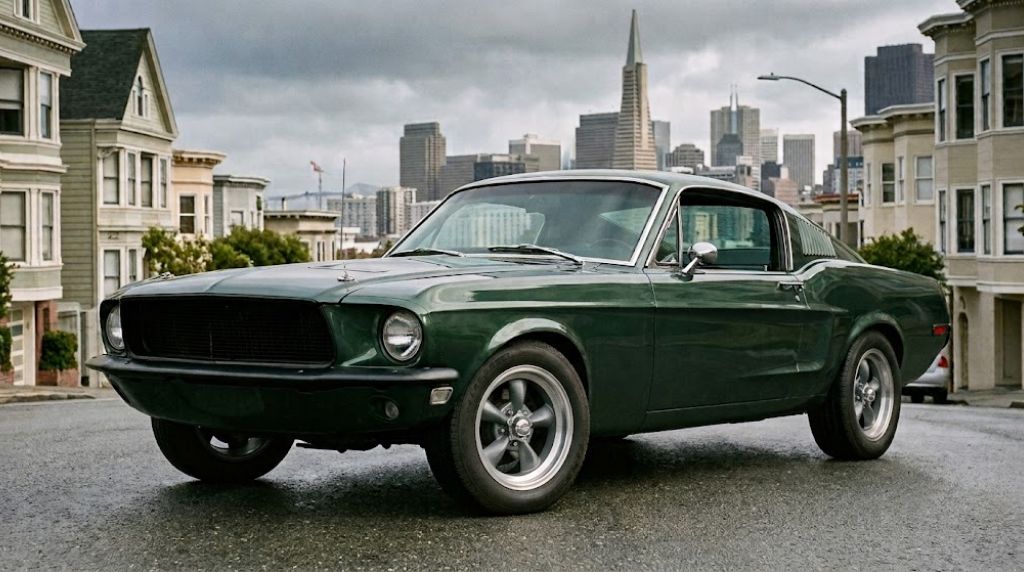
He knew everything there was to know about the 1968 Ford Mustang Fastback, and he mentally checked everything off as he walked the Highland Green beast. She wore gray Torq Thrust wheels. Check. She had the right shade of green paint with a matte black rear valance. Check. All GT badging had been removed and smoothed. Check. A 390 big-block engine filled the engine bay, with the manual transmission and a posi-traction ready to take any and all abuse dealt to them by his angry right foot. CHECK, CHECK, CHECK! He laid down the cash and the car was loaded up, and they headed home.
Camera recorders rolled as the trailer door opened and then his dream was parked in the driveway. Countless hours, years, decades in fact, were spent locked in his cubicle at his soul-sucking job to save up enough cash for this moment. He proudly posed for the camera when an idea occurred to him: to run the free VIN decoder on classicvindecoder.com.
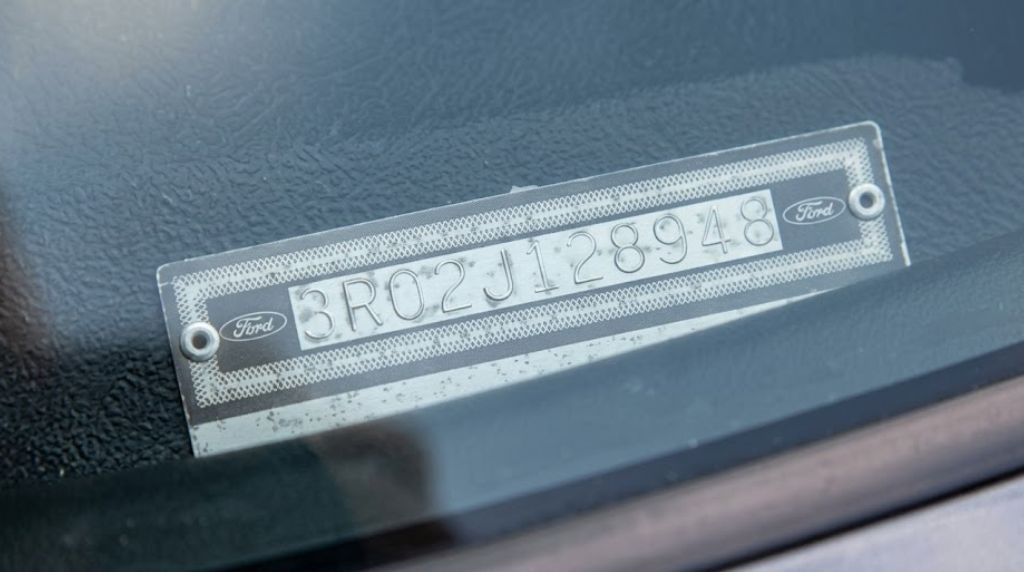
The smile disappeared as all the joy and color ran from his face. He checked, and then he double-checked. The 11-digit VIN code showed an “01” among the jumbled digits, not the “02” that signified a fastback. In an instant, his entire world was shattered, his knees buckled, and he thought he might lose his lunch right then and there.
This is a true story. But there’s a bigger problem: there could be many more like it. The main lesson is simple—before you buy a classic car, run the VIN first.
- Stolen VIN: His first thought- no, his greatest fear was that perhaps the tag sitting on the dash was from a stolen car. If that VIN code, now attached to the fastback body, could have been reported stolen. And if so, he not only loses his car but also all the cash he sank into it.
- Cloned car: Of all the crappy outcomes, this one was the best option. The fastback in front of him may have started life as a clone. If disclosed in the sale, great. But his was not, and paying a premium for a true fastback can easily set you back five digits in your classic car investment.
- Drivetrain Debacle: In ‘68, he may luck out and have his hands on an S-code coupe, which means that the car was born with the pavement-pounding 390 Ford Big Block. But there’s only one way to know: run the VIN and then double-check that the VIN matches the partial VIN that’s stamped on the back of the motor.
- No Birth Certificate: Ford fans and GM gearheads delight in the fact that they have access to the Marti report (Ford) and Pontiac has the PHS, while GM offers the GM Heritage Center to send you a “birth certificate” per se, or a complete breakdown of exactly how your car was built when it rolled off the assembly line.
In the end, any of these problems can tank your ride’s value or leave you with a very expensive lawn ornament and a new diagnosis of high blood pressure and chronic heartburn. There’s no medication for that kind of hot rod heartbreak, so remember the main takeaway: before you drop a big old wad of cash, run the VIN!
Luckily for us, muscle cars and hot rods were built at a time when VIN codes had not yet been standardized. The rambling digits of random numbers and letters were identifiers that manufacturers used to determine what the car was. It wasn’t until 1981 that the NHTSA mandated a standard 17-character VIN format. So, if you’re like me and have fallen for everything with four wheels prior to the 80s, then you have to learn two things: where is the VIN, and how to run it. First, let’s track down the VIN on a classic car.
Where is the VIN on a classic car?
You know what most of us loved as kids? Scavenger hunts. And that’s exactly what you get to do in search of the VIN. Prior to ’81, the VINs could be located anywhere, so here’s a quick guide on where to look.
- Dashboard: This should be your go-to place to check for a VIN. Classic cars built in the 60s and 70s began placing them on the dash. Peek under the dash, more towards the bottom of the window. Start at the driver’s side and go to the passenger side. If it’s not there, let’s move on.
- Door Jambs: It’s not uncommon to open the door and find a small, metal tag riveted to the door jamb. This is definitely the next place to snoop around in search of the VIN. Pro tip: Make sure that if your car has a door-jamb VIN and a dash VIN, they match!
- Engine Bay: Pop the hood and let’s go to work! There are several locations where you might find the VIN in the engine bay. First, check the firewall near the bulkhead. Next, check your inner fenders, and as the car ages, look deeper. Sometimes you may even have one stamped on the radiator support.
- Frame: It wasn’t uncommon for the factory to stamp the frame rail as well. Scour the area, especially near the rear end. Hotrodder beware: This isn’t always the most reliable source as frames, just like engines, are removable and replaceable. You might have a frame that’s been swapped, so this shouldn’t be your go-to for ID’ing your ride unless you’re checking for numbers matching.
- Engine: Ditto for the motor! Finding a numbers-matching car is a dream come true. But most of these cars had a heart transplant along the way. So a VIN, often stamped on the rear of the motor, the front or side of the block, is more about checking whether a muscle car is matching-numbers than about identifying the vehicle itself.
What to do when you find the VIN:
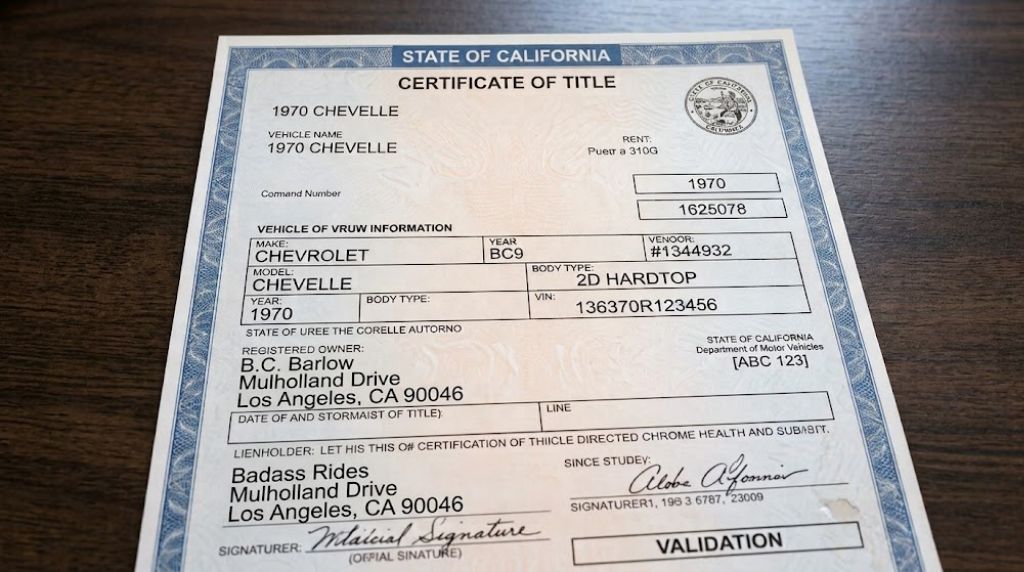
Now that you’ve located your VIN, we need to figure out what to do with the information. First thing to do is cross-reference the paperwork. Ask to see the title and confirm that the VIN code, often listed on the top, matches the VIN on the car. If not, don’t walk but run from the car.
Back in the old days, you’d have to find an old manual or a book on VIN codes to decipher the info. But now, we just have to access our handy-dandy classic car VIN decoder! Buythecar.com makes it easy by having it ready and here for you. Using it is as easy as 1, 2, 3, baby! Now that you know what to check, here’s how to use it.
- Navigate to the website. It’ll have some more information on VIN’s for you to read, but the search bar at the top is what we’re after.
- Plug in the VIN. Make sure that each digit or letter is correct and in the correct order. Otherwise, you’re going to throw an error code.
- Punch the search button! The decoder is often free and almost immediately gives you a full breakdown on how the vehicle rolled out of the factory.
What to expect from the VIN Decoder
- Year: Some cars may be a different year and model than when they were actually produced. So you might be staring at a 1970 Chevelle that was originally assembled in 1969.
- Make: Pretty straightforward here, but it’s going to tell you who built the car.
- Model: This is a critical piece of information and the only way to determine whether you’ve got a real deal car or are about to be duped by a clone. Is it a GTO or is it a Lemans? This will tell you.
- Engine & Drivetrain specs: What powered your ride when it was brand new? This will tell you. Again, double-check the codes on your engine to make sure they match, if you care to know. If you’re happy with what’s between the fenders, then happy days!
- Trim: Are those badges real? Is that Mustang truly a GT or once again, a clone? This is how you know.
- Manufacturing Plant: Where was your ride born? Maybe Detroit, maybe California? This also gives you a good idea where your car has lived most of its life.
We love the classic car world, and I have to be honest, sometimes a seller won’t know this information. It’s not that they’re hiding anything from you; they might just not know. So do the homework, run the VIN, and avoid the nightmare of a hot rodder’s broken heart. Happy hunting, my friends, and I look forward to cruising together soon.